Can Gable Steveson Learn to Fight on His Feet? The Olympic Wrestler's Ceiling
Twelve seconds were enough to call Gable Steveson into question at UFC 331. We break down what really went wrong against Sean Sharaf, why his Olympic wrestling barely shows up and what must change so his career does not accelerate toward disaster.
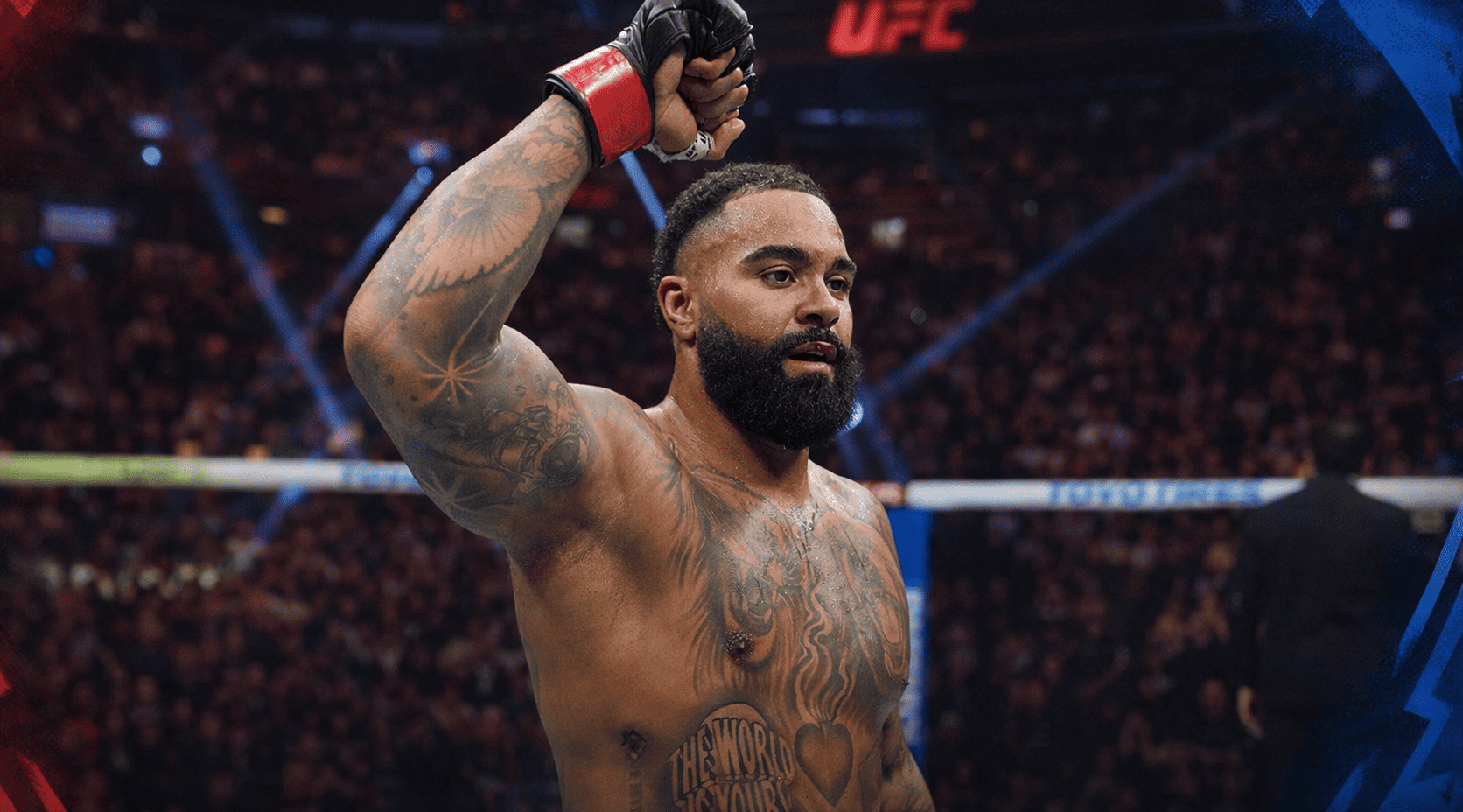
Twelve seconds into the first round, with the second punch he threw in the entire fight, Sean Sharaf switched off Gable Steveson with a perfect left hook. The man who came to MMA with Olympic gold in freestyle wrestling and two NCAA national titles hit the canvas without attempting a single takedown. The internet celebrated with memes; the sporting question the knockout leaves is more uncomfortable and more lasting: can the best wrestler of his generation build a complete MMA game before his shortcomings on the feet cost him again?
What the knockout exposed is not an accident or a bad night, but a concrete problem visible on tape: almost no defense in the exchange, Olympic wrestling that has not yet become a threat inside the Octagon, and a career accelerated at a pace almost no prospect can withstand. None of those three points depends on the news cycle: they will follow Steveson into every fight he has left.
A career built at double speed
Steveson's path to this point is extraordinarily short. Olympic gold at the 2020 Games, two NCAA Division I national championships, a stint in professional wrestling and the jump to MMA in September 2025, when he debuted in LFA with a 99-second TKO of Branden Peterson, with Jon Jones shouting from the corner that a star had been born, according to talkSPORT. In April 2026 the UFC confirmed his signing, and his promotional debut came in July. We are talking about a fighter with five professional fights, aged 26.
That acceleration has consequences. As the UFC on Paramount+ analysts explained after the loss, Steveson is learning on the job in the UFC, on camera and on main cards, while most fighters work through those mistakes in fights almost nobody sees. He won his debut as the biggest betting favorite in UFC history and lost his second fight in twelve seconds: the margin for learning in public is brutal.
The debut that hid the problem
Against Elisha Ellison at UFC 329, Steveson seemed to confirm the story. He won by TKO at 2:31 of the first round, landed front kicks and outstruck his opponent 41 to 14 in total strikes. He did it, too, almost without wrestling: according to ESPN's report, he attempted only one takedown in the whole fight and Ellison defended it. That night answered the easy question (can he hurt people on the feet?) and left the hard one untouched: can he survive an exchange when the other man is also punching to finish?
Ellison, an opponent with three losses, was not the right test. The UFC put Steveson in an enormous showcase, and his corner, led by Greg Jackson and Jon Jones, celebrated a debut that really tested his offense more than his survival. The difference between the two is exactly where the twelve seconds in Los Angeles were lost.
Twelve seconds: anatomy of a basic mistake
Sean Sharaf arrived 0-2 in the UFC, both losses by knockout. He was not an obvious candidate to topple the heavyweight division's biggest prospect, and yet he did it with the second punch he threw: a decoy right hand and a left hook as Steveson backed out of the exchange with his hands low and his chin exposed. Referee Frank Trigg stopped the fight at 12 seconds, the third-fastest finish in UFC heavyweight history according to the official announcement in the Octagon interview, and it was the first loss of Steveson's MMA career (4-1), according to ESPN.
The tape review with the UFC on Paramount+ analysts is devastating because it is not about power or luck. At the 3:10 mark they point out that Steveson closes his eyes when he gets hit and ask whether his sparring has prepared him for real punishment. Between 4:30 and 5:16 they narrow the problem down: he did not fall because he dove into a war, which was the risk everyone had imagined, but because of an elementary technical error when exiting the pocket, and because of a self-image (that of being untouchable) that let him enter the exchange without layers of protection.
It is the difference between losing because of a risky plan and losing because of having no defense. Against Ellison he could afford to fight with just his hands because his opponent never sent back anything like a mean left hook. Against Sharaf, heavyweight physics did the rest: one clean shot is enough to change the entire trajectory of a prospect.
The wrestling that never arrived
The most striking thing about the Steveson file is that his decisive weapon, the wrestling that made him a legend on the mat, barely exists in the Octagon. One takedown attempt in two UFC fights, as the analysts recall at the 5:18 mark of the breakdown, and that attempt ended in a choke scare that revealed, in their view, a ground game that is still green. Daniel Cormier summed it up bluntly after the fight: a 4-0 fighter with his background has to wrestle.
Sharaf, in fact, prepared for the fight expecting the takedown: the wrestling threat shaped his entries, and still Steveson never used it to punish anything. It is the symptom of an unfinished transition. Being the best wrestler in the world does not mean knowing when to rely on it in a five-dimensional fight, how to chain a takedown with strikes, or how to defend yourself when plan A does not show up. The athlete is exceptional; the fighter is half-built, and every exchange on the feet without his wrestling takes away another layer of safety.
The debate over whether freestyle wrestling is the best base for MMA, which runs through the collective analysis of the heavyweight division, finds its lab case here: the base is everything as long as you can use it, and it is of little help against an opponent who has already decided the fight will last one exchange. The current dominance of strikers among UFC champions is not unrelated to this problem: being able to take the fight to the mat is an advantage that depends on surviving the trip there first.
The schedule of an accelerated prospect
The parallels the analysts themselves draw at the 6:23 mark help put the setback in context: Aaron Pico and Bo Nickal, two wrestling phenoms with similar expectations, were hit hard early, endured public disappointment and rebuilt their careers with concrete improvements. The road exists. What sets Steveson apart is the stage: nobody before him had debuted with so much noise, or learned to defend himself in front of main-card cameras.
The early knockout adds a variable that cannot be simulated: the chin. The same analysts wondered how many knockouts a fighter with five fights can afford, and compared the case with the losing stretch Pico went through before stabilizing. Nobody knows whether Steveson has a normal chin or a short one; now he does not know either, and that doubt travels with him into every future exchange.
What to watch in his return
The indicators for judging his progress are concrete. First, whether his wrestling becomes a real threat again: takedowns shown from the first minute, chained with strikes, not a token attempt. Second, whether a second layer of defense appears on the feet: a high guard when exiting exchanges, lateral movement and a plan that does not rely on reflexive slipping. Third, the physical factor: the analysts estimate he weighs around 235–240 pounds, some twenty less than in his college days, and debate whether he should drop to light heavyweight, a risky move for an athlete who has never cut weight.
Fourth, time. The recommendation repeated throughout the analysis is a layoff of at least six months to rebuild his tools and find out whether he truly wants MMA. Gable Steveson's True Contender MMA profile shows the exact impact of the loss on our Elo: from 1637.52 to 1505.73, a drop of 131.78 points already built into the model, mirroring Sharaf's gain. It is an X-ray, not a sentence: at 26 and with five fights, his ceiling has not been written yet.
That is why the twelve-second knockout should not close any conversation, but open it with better questions. Steveson does not need to prove he is an exceptional athlete: that is already proven on the mat. He needs to prove he can learn not to get hit while he decides, at last, when his wrestling enters the scene. Until those two pieces fit, every heavyweight with a left hook and nothing to lose will remain a coin flip.
Sources
- UFC: Sean Sharaf knocks out Gable Steveson in 12 seconds (UFC 331)
- ESPN: Olympic champ Steveson KO'd by Sharaf in just 12 seconds
- UFC: Steveson's knockout in his debut (UFC 329)
- ESPN: report on his debut against Elisha Ellison
- MMA Junkie: reactions from Daniel Cormier and Joe Rogan
- talkSPORT: his professional debut in LFA
- UFC on Paramount+: technical breakdown after the knockout
- UFC: Sean Sharaf's Octagon interview
Comments
Loading comments...